How Fiber-Optic Cables Send Data Using Light Instead of Electricity
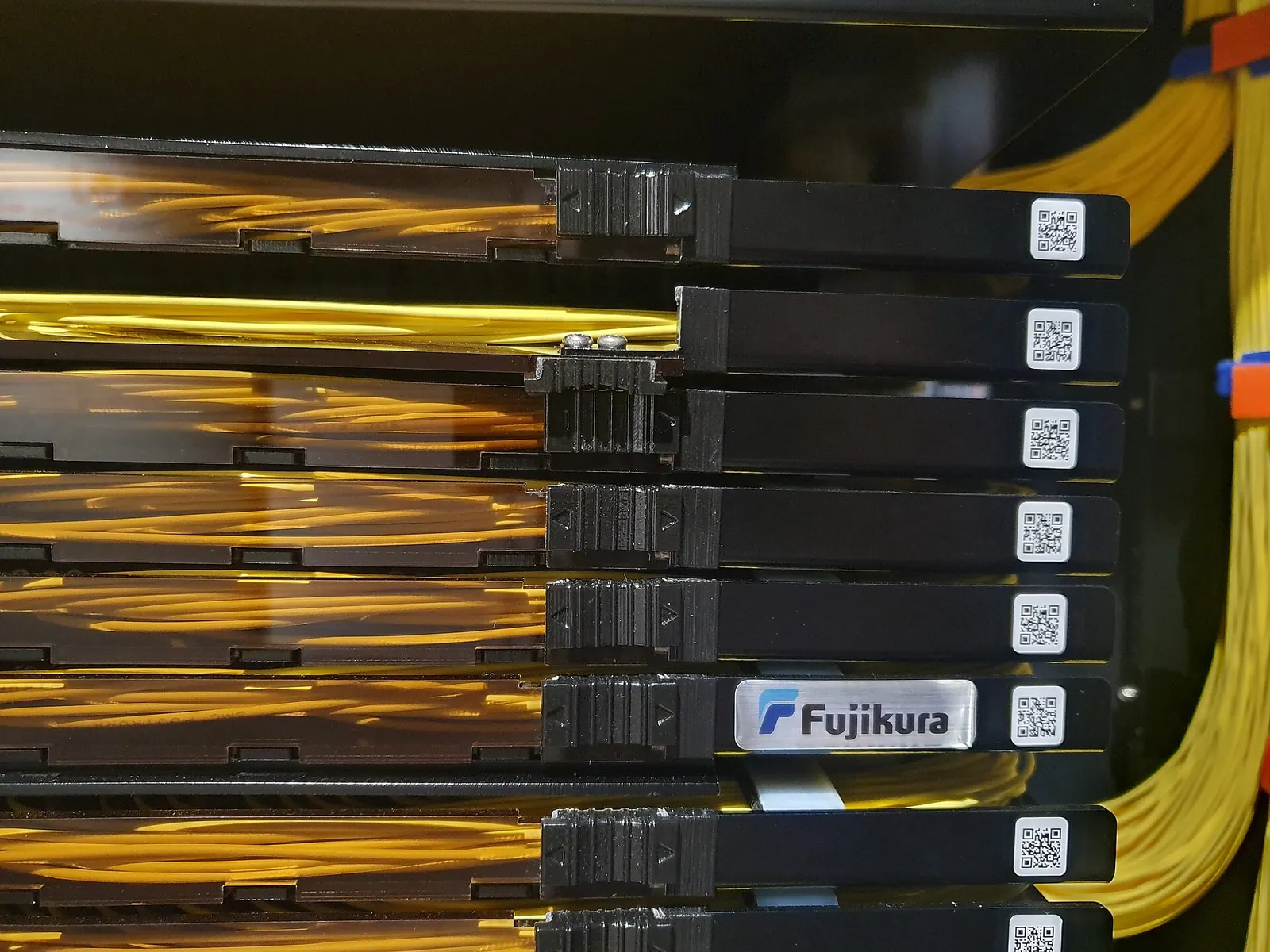
CC0, via Wikimedia Commons
Fiber-optic cables send data by flashing light on and off billions of times per second, using pulses that travel through a glass strand thinner than a human hair. Each flash represents a piece of digital information, and because light moves so fast and doesn't degrade the way electrical signals do, fiber can carry far more data, far more reliably, over far longer distances. A single fiber strand can carry data at speeds measured in terabits per second in modern networks, which is why fiber is the backbone of the internet itself, not just the last stretch to your house.
The part people miss: it's not one beam, it's a bouncing signal
Most people picture a laser shooting straight through a wire like a hollow tube. That's not quite it. Inside a fiber-optic cable, there's a glass core surrounded by a layer called cladding. The cladding has a different density than the core, so when light hits the edge of the core at the right angle, it reflects back inward instead of escaping. This is called total internal reflection. The light doesn't travel in a straight line so much as it bounces down the length of the cable, wall to wall, thousands of times per mile, staying trapped inside the core the whole way.
This matters because it explains why fiber holds up over distance and electrical cable doesn't. Copper wire sends data as electrical voltage, and voltage weakens as it travels, picking up interference from nearby wires, power lines, even weather. That's why old DSL and cable connections slow down the farther you are from the provider's equipment. Light doesn't have that problem in the same way. It can travel tens of kilometers, sometimes over 40 miles depending on the fiber type and equipment, before it needs a boost. That's a rough range and actual distance depends on the network design, but it's an order of magnitude better than copper.
The other thing people miss is that fiber doesn't carry electricity at all, which is why it's immune to lightning strikes frying a line and why it doesn't pick up hums from electrical interference. A fiber line running next to a power substation performs the same as one running through a quiet field. That's a real advantage in areas prone to storms or with a lot of industrial electrical noise nearby.
What this means for your connection at home
You don't need to understand the physics to use fiber internet, but the physics explains why fiber-based plans feel different day to day.
- Speeds stay consistent whether you're near the provider's hub or farther out, unlike copper where distance drags speeds down.
- Upload speeds can match download speeds, because light doesn't have the same directional limitations that older copper-based technologies do.
- The connection is less likely to degrade from nearby electrical equipment, storms, or old wiring in your neighborhood.
- Outages tend to come from physical cuts, like construction crews hitting a line, rather than gradual signal decay.
If you're evaluating providers, the honest way to check whether a connection is true fiber-optic is to ask whether the fiber runs all the way to your building, sometimes called Fiber to the Home or Fiber to the Premises, versus fiber that stops at a box down the street and finishes the trip over old copper. That last stretch of copper is where a lot of the speed and reliability gets lost, even if the provider still calls it a "fiber" plan.
What to actually do
If you're deciding between providers, ask directly: does the fiber connect to my building, or does it stop somewhere on the street? Ask what happens during a power outage, since fiber itself carries no electricity but your home equipment still needs power to convert the light signal into something your devices can use. And if you're a community leader looking at broadband options, ask providers for their build maps, since actual fiber-to-the-premises networks are a different investment and different result than upgraded copper marketed as fiber. GigSpeed builds fiber straight to the home or business for exactly this reason. It's the difference that shows up in your daily speeds, not just in the sales brochure.
Related: For more on why the actual connection point matters, see our post on the difference between fiber-to-the-home and fiber-to-the-node.
Ready for internet that actually keeps up?
Fiber straight to your home or business, with support from people who know networks.
Check availability