How School Districts Partner With ISPs to Close the Homework Gap
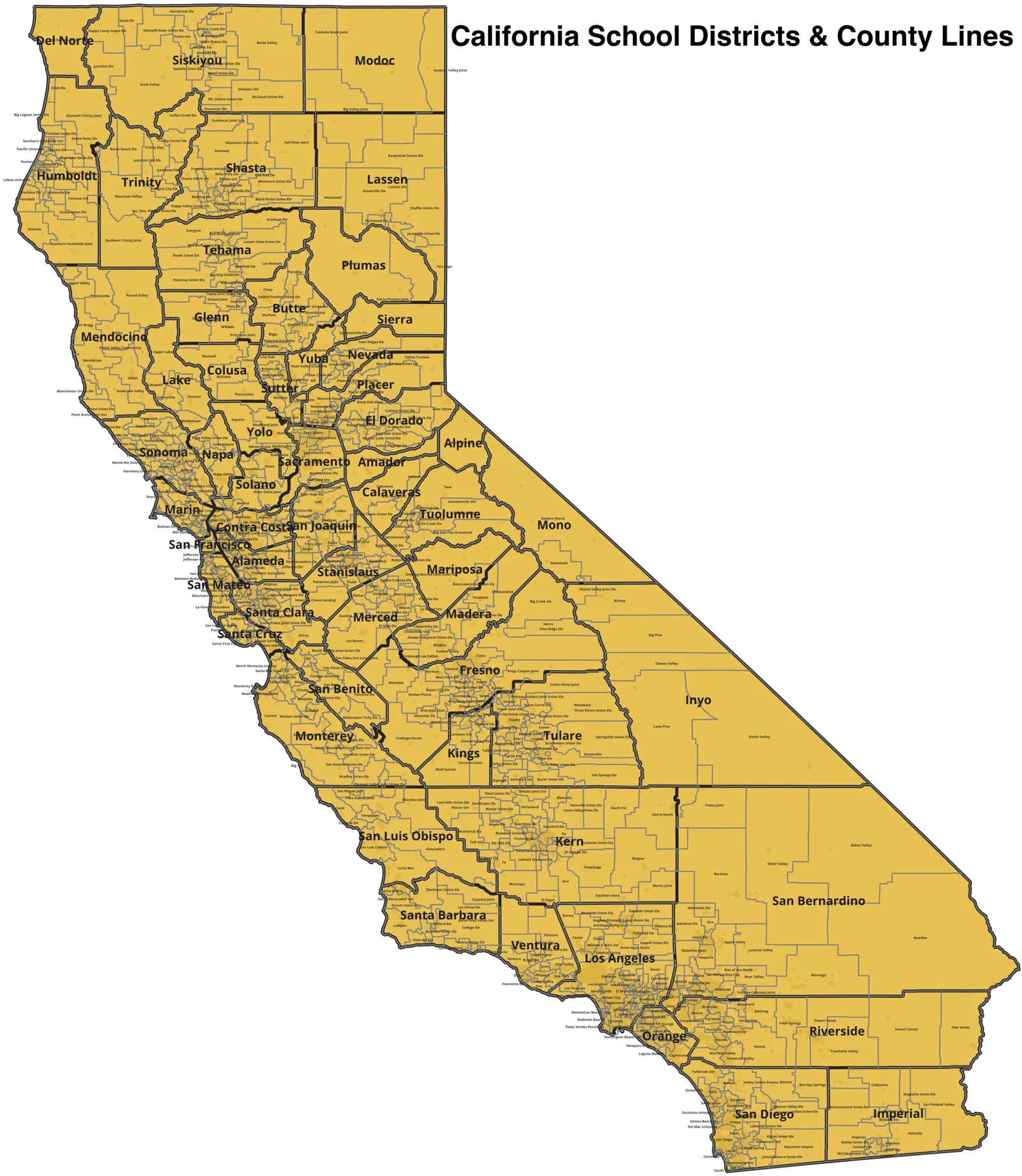
CC0, via Wikimedia Commons
School districts close the homework gap by partnering directly with internet service providers to fund fiber installs, subsidized home plans, or mobile hotspots for students who don't have reliable internet at home. Estimates of how many K-12 students lack adequate home broadband have ranged from roughly 9% to 17% of households with school-age kids, depending on the year and how "adequate" is defined. These partnerships usually run on a mix of federal E-Rate funding, one-time pandemic-era relief dollars, and direct agreements between a district and a local provider.
Key takeaways
- Somewhere between 1 in 10 and 1 in 6 households with school-age children have reported not having reliable home internet, though the exact figure shifts year to year and by survey.
- E-Rate is the long-running federal program districts lean on most, and it can cover a portion of internet and network costs for schools and libraries.
- The Emergency Connectivity Fund, a roughly $7.17 billion federal program, paid for hotspots, devices, and connections during and after the pandemic, but it is no longer accepting new applications.
- Fiber-to-the-home deals tend to serve students better long term than hotspots, but hotspots fill gaps where fiber build-out isn't finished yet.
- The most common failure point isn't the technology. It's districts not tracking who actually needs service, so money gets spent without closing the real gap.
Why Do So Many Students Still Lack Home Internet?
The homework gap isn't just about rural areas without infrastructure. A lot of it is affordability. A family can live three blocks from a school with gigabit fiber running down the street and still not have service at home because a monthly bill doesn't fit the budget. Surveys from groups like Pew and the FCC have found that lower-income households are far more likely to report skipping or canceling internet service, even in cities with decent broadband availability.
The other piece is genuine access. In rural counties, the nearest fiber or cable line might stop miles from a student's house. Satellite internet exists, but latency and data caps make it rough for video calls, uploading large files, or anything that needs a steady connection during a school day. Fixed wireless can help but performance varies a lot depending on terrain and distance from the tower.
Then there's the hardware gap that rides along with the connectivity gap. A district can get a family connected and still have a problem if the only device in the house is a parent's phone being shared by three kids. Most serious ISP-district partnerships end up addressing devices and connectivity together, because solving one without the other doesn't move the needle much.
Districts that have looked closely at this usually find the gap is uneven. It's rarely evenly spread across a county. It clusters in certain neighborhoods, certain apartment complexes, certain zip codes. That's useful, because it means a partnership doesn't have to solve connectivity for an entire district at once. It can target the blocks where the need is concentrated.
What Does an ISP-District Partnership Actually Look Like?
These arrangements take a few common forms, and most districts end up using more than one at the same time.
- Subsidized or free home plans. The ISP offers a reduced-rate or no-cost internet plan for families with students, often verified through free/reduced lunch eligibility or similar income criteria. The district or a grant covers some or all of the monthly cost.
- Direct fiber build-out agreements. A district works with a local or regional ISP to extend fiber into underserved neighborhoods, sometimes contributing conduit, right-of-way access, or partial funding to make a marginal build worthwhile for the provider.
- Mobile hotspot lending programs. The district buys or leases hotspots with data plans and checks them out like library equipment. This is usually a stopgap for students in areas without wired options, not a long-term fix.
- Community Wi-Fi zones. Districts or municipalities work with an ISP to light up free Wi-Fi around schools, libraries, and sometimes school buses parked in neighborhoods after hours.
- Bulk or wholesale deals. Some districts negotiate a flat rate for connecting a set number of households, which gives the ISP predictable revenue and the district a known, budgetable cost.
None of these are mutually exclusive. A typical mid-size district might run a hotspot program for the most remote students, a subsidized plan for income-qualified families in town, and a multi-year fiber build agreement for a neighborhood the local provider hadn't reached yet.
Funding Sources and What Commonly Goes Wrong
E-Rate is the backbone most districts know. It's been around since 1996, funded through the Universal Service Fund, and it helps schools and libraries pay for internet access and internal network costs. The discount a district gets depends on poverty level and location, and historically ranges from around 20% to 90% of eligible costs. E-Rate mostly covers school buildings, not students' homes, though there's been ongoing debate and some pilot efforts about extending it further into home connectivity.
The Emergency Connectivity Fund was a bigger, if temporary, lever. It was a roughly $7.17 billion FCC program that reimbursed schools and libraries for hotspots, modems, routers, and even laptops and tablets for off-campus learning. It ran through several application windows from 2021 into 2023, and funding has since been exhausted. Districts that built hotspot programs on ECF money have had to figure out how to sustain them once that funding ran out, and some simply couldn't keep the program at the same scale.
State and local money has filled some of the gap left by expiring federal funds. A number of states set up their own broadband equity offices and connectivity grant programs, often tied to the federal BEAD program's broader infrastructure push. These vary enormously by state in both size and rules, so a district in one state may have options a neighboring state doesn't.
Here's what commonly goes wrong. Districts sometimes buy hundreds of hotspots without a real plan for ongoing data costs, and a year later they're stuck with a device fleet they can't afford to keep funded. Another common mistake: treating the hotspot or subsidized plan as a one-time fix instead of checking in on whether the service is actually working. A hotspot that drops to a crawl at 7pm because a dozen neighbors are also connected to the same tower doesn't do a student much good during homework hours. Districts that succeed tend to survey families regularly, not just at enrollment, and they track actual usage and complaints, not just the number of devices handed out.
Fiber, Hotspots, or Both? Matching the Tool to the Problem
Hotspots are fast to deploy and relatively cheap up front, which makes them attractive for an urgent gap, like the one that opened up when schools went remote almost overnight. But they come with real limits. Cellular data plans often cap usage, speeds drop under network congestion, and coverage can be spotty indoors, especially in older buildings or rural homes with poor signal to begin with.
Fiber is the more durable answer where it's available or can be extended. A fiber connection to the home doesn't depend on cell tower congestion, doesn't usually carry hard data caps, and supports multiple kids doing video calls or uploading assignments at the same time without everything slowing to a crawl. The tradeoff is cost and time. Running new fiber lines takes permitting, construction, and months to years depending on the distance and terrain, not weeks.
A reasonable approach most districts land on: use hotspots to solve the emergency in front of you, and use fiber partnerships to solve the problem for good. If a district knows a neighborhood is going to need connectivity for years, not months, it makes more sense to push for a permanent fiber build than to keep re-funding a hotspot program every budget cycle.
Providers that already run fiber in a region, including regional players like GigSpeed, are often the easiest partners for this kind of long-term build, since the infrastructure and local crews already exist rather than needing to be built from scratch.
FAQ
Does E-Rate pay for internet at students' homes?
Generally no, not directly. E-Rate mostly funds connectivity and equipment inside school and library buildings. Home connectivity programs usually rely on separate funding, like state grants, district budgets, or programs such as the now-closed Emergency Connectivity Fund.
How do districts figure out which students actually need help?
Most use a combination of enrollment data, free and reduced lunch eligibility, and direct family surveys. The better programs survey more than once a year, because a family's internet situation can change, and because a hotspot or subsidized plan that worked in September might be failing by January.
Is a mobile hotspot as good as home fiber for schoolwork?
Not usually. Hotspots work fine for basic browsing and some video calls, but they can struggle with data caps, network congestion at peak hours, and weak indoor signal. They're a reasonable short-term fix, but most districts treat fiber as the better long-term solution where it can be built.
What This Means for Families and Local Leaders
If you're a parent and your school district offers a subsidized internet plan or a hotspot program, it's worth asking directly what the application process looks like and whether eligibility is based on income, location, or both. If you're an educator, pushing your district to survey families regularly, not just once, will catch the kids who fall through the cracks after the first signup wave. And if you're a community or municipal leader, the biggest lever you have is usually pushing for permanent fiber infrastructure in underserved neighborhoods, since that's the fix that doesn't need to be re-funded every single year.
Ready for internet that actually keeps up?
Fiber straight to your home or business, with support from people who know networks.
Check availability