What Fiber Construction Really Costs Per Mile and Who Usually Pays for It
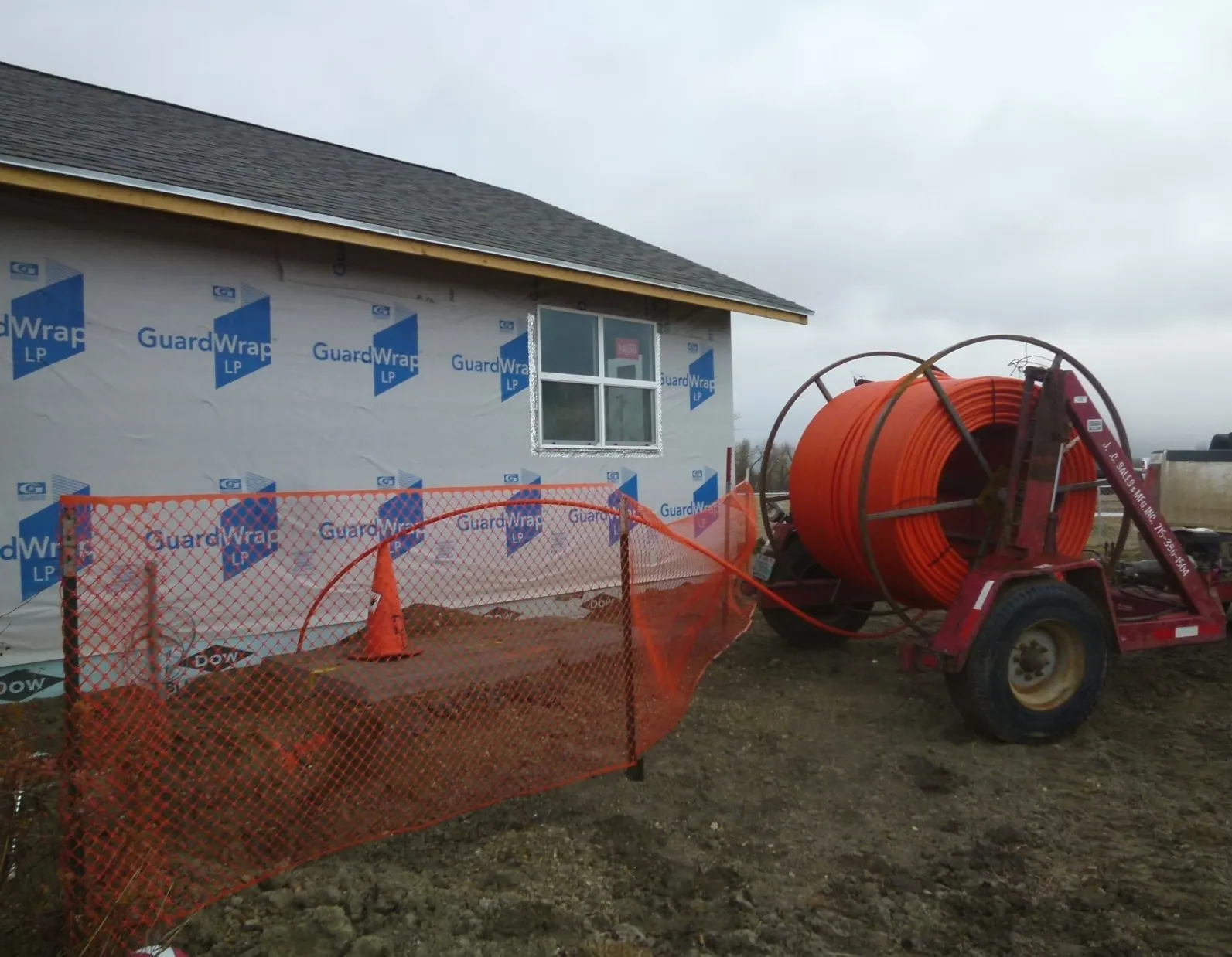
Public domain, via Wikimedia Commons
Running fiber-optic cable costs somewhere between $20,000 and $100,000 per mile, depending on terrain and whether the line goes underground or on poles. Providers pay most of that cost upfront, but taxpayers, developers, and sometimes homeowners cover a share too, especially in rural areas where the math doesn't work without help.
The short answer
The most honest range is $20,000 to $50,000 per mile in dense suburban or urban areas, and $50,000 to $100,000 or more per mile in rural stretches. Urban builds cost less per mile because there are more homes to split the cost across, even though permits and traffic control add expense. Rural builds cost more per mile because the crew might dig for two miles to reach five houses. That per-home economics is the whole reason fiber shows up in some neighborhoods years before others. A provider isn't being unfair when it builds in a subdivision of 400 homes before a country road with 12. It's following where the revenue can realistically cover the construction bill within a reasonable number of years.
What changes the timing and cost
A few factors push the price up or down, and they explain a lot about why fiber rollout looks the way it does on a map.
- Underground versus aerial. Burying fiber means trenching or directional boring, which costs far more than hanging cable on existing utility poles. A single mile of underground work in rocky or urban soil can run two to three times the cost of an aerial build.
- Pole attachment and right-of-way agreements. Providers often need permission from pole owners, usually the local electric utility, and permits from the city or county. Negotiating those agreements and paying attachment fees adds cost and, more often, adds months or years of delay before a single cable goes up.
- Housing density. Cost per mile is fairly fixed once terrain and method are set, but cost per home passed swings wildly. A mile with 100 homes spreads the bill much thinner than a mile with 10 homes, which is why dense areas get built first almost every time.
- Existing infrastructure. If a provider or its partner already has conduit or poles in place from a past project, new fiber can ride along that infrastructure for a fraction of the cost of starting from scratch.
Who actually pays
In most cases the internet provider funds construction directly, then earns that money back over years through subscriber revenue. That's standard in cities and suburbs where the per-home cost pencils out within a reasonable payback period, often five to ten years.
In areas where the math doesn't work on its own, a few other sources of money typically step in:
- Federal and state broadband grants. Programs aimed at closing the digital divide, such as BEAD funding and various state broadband offices, cover part or most of construction cost in underserved rural areas. This is now one of the biggest levers moving fiber into places the private market alone would skip.
- Municipal or co-op investment. Some towns and electric cooperatives build their own fiber networks, either leasing access to providers or operating the service themselves, funded through bonds or utility revenue.
- Developer contributions. New subdivisions and commercial developments sometimes pay to have fiber conduit installed during initial construction, since it's far cheaper to lay conduit before roads and driveways exist than to dig them up later.
- Homeowner or business co-pays. In some rural extension projects, a provider will build to a certain point for free and ask nearby residents to split the cost of the final stretch, sometimes called a "line extension charge."
Signs your area is a good candidate but hasn't been built yet
If you're wondering why your street doesn't have fiber while a nearby town does, look for these patterns:
- Your only wired options are DSL over old copper or a cable company with no fiber competitor nearby.
- Your area has grown in population recently but the utility infrastructure looks decades old.
- You've seen fiber construction crews working a mile or two away for over a year without reaching your block.
- Local government or a regional co-op has mentioned applying for broadband grant funding but no construction has started.
- New housing developments nearby have fiber while older, established neighborhoods do not.
None of these guarantee fiber is coming soon, but they're the usual signs that a build is economically close to making sense, or that public funding could tip it over the edge.
What happens if the wait drags on
The cost of not having fiber isn't abstract. Remote workers get stuck with unreliable upload speeds that make video calls and large file transfers a daily struggle. Small businesses lose customers to competitors in better-connected towns, and some can't run modern point-of-sale or cloud-based systems reliably. Home values in underserved areas can lag behind comparable homes with fiber access, since buyers increasingly treat internet quality like they treat school districts. For a whole town or county, the absence of fiber can slow economic development for years, since businesses look elsewhere when reliable broadband isn't available.
None of this means residents are powerless. Local governments that document demand, apply for grant funding, and negotiate directly with providers or cooperatives often speed up timelines by years compared to waiting passively. Providers like GigSpeed, which build fiber directly to homes and businesses, generally prioritize areas where community leaders have organized demand and helped clear permitting hurdles, because it lowers risk and speeds up the payback math that makes construction possible in the first place.
Ready for internet that actually keeps up?
Fiber straight to your home or business, with support from people who know networks.
Check availability